

Engines of Stone and Shadow
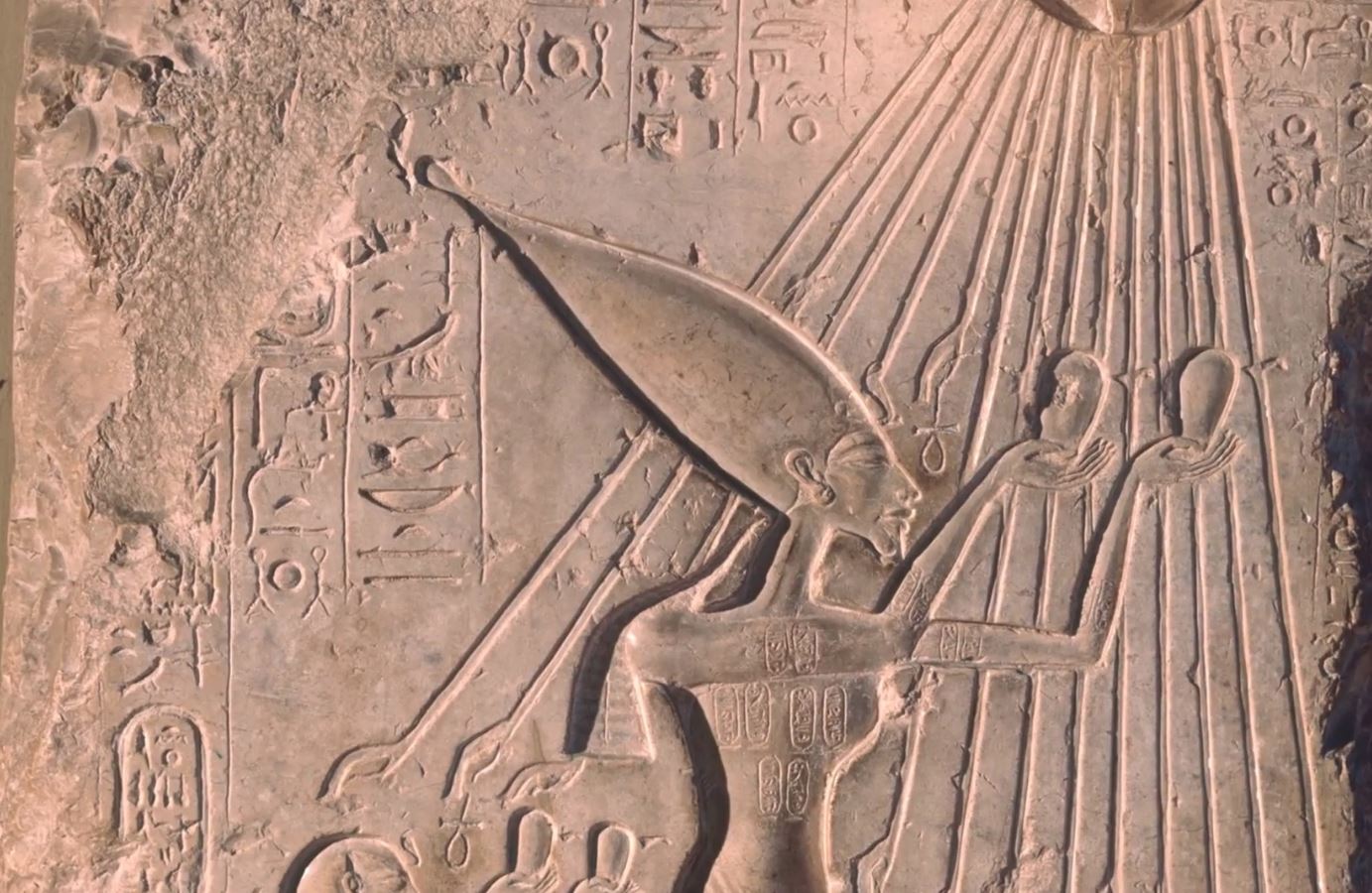
The forgotten brilliance of machines that shaped civilization long before industry had a name
Firelight and the First Tools of Motion
When early humans learned to command fire, they gained not only warmth and defense but the first laboratory of transformation. Heat softened minerals, hardened wood, and opened new ways to imagine purpose. In that glow, flint was reborn as knife, clay became vessel, and ore began its slow conversation with human will. From the rhythmic striking of stones came sparks that hinted at machinery long before wheels were carved. Every swing of a hammer or twist of a cord carried a memory of innovation, and from these humble gestures the technology of ancient worlds began to unfold like a map of ingenuity.
The Wheel and the Dream of Continuity
Once circular motion entered the human imagination, the landscape of possibility changed forever. The wheel transformed burdens into movement, linking distance to design. Carts multiplied across plains, potters spun clay with precision, and gears found their first conceptual ancestors in the turning of axles. Yet the idea was as much philosophical as practical. To turn something endlessly meant to imitate the heavens themselves. Civilizations built on cycles found reassurance in the smooth perfection of rotation, and their machines mirrored this belief. In their silence, these wheels whispered that balance could be engineered into life itself.
Water As the First Engine
Rivers served as both road and resource. Ancient engineers understood that flowing water carries energy as well as nourishment. In Mesopotamia, shadufs lifted irrigation water with the grace of levers guided by rope. In Egypt, the saqiya used oxen and gears to raise the Nile into channels that fed fields with patience. Farther east, the Chinese waterwheel ground grain and powered hammers that struck metal with tireless rhythm. Water, though fluid, taught stability by offering a constant supply of motion. It turned human labor into choreography, and in doing so, created the earliest examples of renewable power.
Stone That Measured the Sky
Monuments often hide mathematics beneath their grandeur. The builders of megaliths tracked equinoxes and solstices through alignments too precise to be accidents. Stone circles and pyramid corridors revealed that ancient architects were also astronomers, designing with shadows as their rulers. The Parthenon’s subtle curvature corrected optical illusion through geometry. Mayan observatories followed Venus with accuracy that rivaled later telescopes. Each structure was both calendar and computer, translating celestial patterns into architecture. In their quiet endurance, these stones continue to calculate seasons long after their makers have vanished from the sands.
Bronze and the Language of Alloy
Metallurgy began as a mystery of color and sound. When copper met tin, the result was stronger than either parent metal. The discovery of alloying gave rise to weapons, art, and tools that could survive centuries. Smelters became alchemists of heat, learning that purity could weaken and impurity could strengthen. Crucibles glowed like miniature suns, each casting recording both craftsmanship and philosophy. Bronze marked humanity’s first conscious manipulation of matter at the atomic level, though its inventors could not name the scale of their achievement. They learned through observation, patience, and repetition, the same methods that drive modern laboratories today.
Mechanisms Hidden in Marble
When the Antikythera mechanism was lifted from the seabed, it startled historians who thought gears belonged to later centuries. Its corroded bronze gears, once polished and precise, tracked lunar cycles and predicted eclipses. The device compressed the sky into metal, merging astronomy with craftsmanship. It revealed that Greek artisans had already reached a mechanical sophistication comparable to clockmakers of the Renaissance. The concept of gearing itself, with interlocking motion governed by ratio, existed in temple doors that opened with heat and in automata that poured wine for astonished guests. Within these contraptions lay a philosophy that equated harmony with motion.
Bridges of Rope and Imagination
Suspension bridges crossed ravines long before steel cables gleamed in modern skylines. The Inca, high in the Andes, wove plant fibers into spans that could bear soldiers and pack animals alike. Each strand, replaced regularly by ritual, ensured the bridge never aged beyond repair. Engineering was inseparable from community, as every household contributed material and labor. Elsewhere, in China and Persia, wooden trusses achieved strength through geometry rather than sheer weight. These structures taught that flexibility can rival rigidity, that tension and balance can coexist as long as faith and mathematics walk together across the same chasm.
Mathematics Carved in Clay
The invention of calculation transformed technology from craft to science. Babylonian tablets recorded algorithms for land measurement and interest rates, their wedge marks preserving logic in durable form. In India, scholars developed systems for zero and positional value, which later powered astronomical predictions of breathtaking accuracy. The abacus, born from necessity, embodied computation as touch rather than abstraction. These early devices did not merely count; they represented the conversion of thought into pattern. From that realization flowed architecture, navigation, and engineering, all bound by the quiet discipline of numbers pressed into clay.
Hydraulics and the Dance of Pressure
Greek and Roman inventors explored water not only for energy but for spectacle. The fountain became both entertainment and experiment. Pipes of bronze and lead carried water uphill through siphons, proving that pressure obeys geometry more than gravity. Hero of Alexandria described machines that hissed and whirred under hidden steam, creating illusions of divine motion in temples. These experiments prefigured engines by demonstrating that controlled pressure could animate metal. Though the secret would fade, it lingered in myths of self-moving statues and doors that opened by miracle, myths born from the technology of hydraulics.
Navigation and the Science of Direction
Trade and exploration demanded more than courage. The compass, discovered through magnetized ore, offered certainty where stars might hide behind clouds. Long before global maps, sailors read the ocean’s pulse through swell and wind, while Polynesian navigators memorized currents, birds, and constellations as living instruments. In China, magnetism guided chariots that always pointed south, blending curiosity with playfulness. These tools allowed connection between worlds separated by thousands of miles. Technology here became empathy in motion, an understanding that the earth itself could teach direction to those patient enough to observe its subtle signals.
Medicine and the Mechanics of the Body
Healing in the ancient world depended on observation sharpened by necessity. Egyptian surgeons used copper scalpels and linen sutures sterilized by wine. Roman instruments for bone repair and eye surgery mirrored the precision of modern medical kits. In India, texts described procedures for cataracts centuries before Europe rediscovered them. Water clocks measured pulse rates, and herbal distillation required an understanding of condensation and temperature control. Medicine was both mechanical and spiritual, grounded in balance rather than dominance over nature. Each invention reflected respect for anatomy as a system worthy of both reverence and repair.
Optics and the Study of Light
Polished crystal and ground glass became the eyes of curiosity. The Greeks experimented with mirrors to focus sunlight, while the Assyrians shaped lenses that magnified inscriptions too fine for the naked eye. Alexandria’s scholars debated whether vision traveled outward or inward, unknowingly framing the questions that later defined physics. The simple act of seeing became a technological achievement when glassworkers learned to bend light intentionally. Even decorative jewelry hid optical experiments, since refraction turned transparency into beauty. Every lens was both a tool and a philosophy: knowledge grows clearer when light is guided through precision.
Sound, Music, and the Machinery of Harmony
Ancient inventors studied vibration long before acoustics gained vocabulary. The lyre, the drum, and the flute were laboratories for wave behavior. Bronze bells in China produced tones calculated by size and thickness, creating scales that balanced mathematical ratios with aesthetic pleasure. Water organs, powered by air pressure, filled arenas with melody. Even architecture became acoustic design, as amphitheaters amplified whispers from stage to stone seats. The harmony of art and physics proved inseparable. Each note revealed a truth: that vibration, when measured, becomes both music and engineering.
Textiles as Code and Machine
Weaving translated thought into pattern through repetition. Looms required logic akin to binary instruction, each thread lifted or lowered in sequence to form design. In some regions, patterns encoded lineage or stories, turning fabric into language. The warp and weft taught control through rhythm, and later ages would rediscover this principle in punch cards that guided early computing machines. Textile production combined art, mathematics, and mechanics, showing that precision could live within softness. Every finished cloth was a program executed perfectly by hand and memory.
Concrete and the Art of Durability
Roman builders discovered that lime mixed with volcanic ash produced a substance that strengthened when wet instead of crumbling. Their concrete structures resisted centuries of waves and weather. The secret lay in the chemistry of pozzolana, a natural additive that encouraged crystals to grow within cracks. Harbors and domes benefited most from this material, which required both patience and proportion. The Pantheon’s dome still stands as a silent equation solved in stone. To invent concrete was to capture permanence in fluid form, an achievement as conceptual as it was structural.
Timekeeping and the Pursuit of Precision
Clocks began with shadows, advanced through water, and eventually joined gears to the heavens. Egyptian obelisks marked hours by the sun’s angle, while Babylonian clepsydrae dripped rhythmically to measure night. The Greeks refined these into complex displays that modeled planetary motion. Time became a craft rather than an abstraction. Calendars ruled agriculture, worship, and administration. Accuracy granted power, for those who measured time controlled work and harvest. In the pursuit of consistency, ancient engineers discovered a truth that would define all later science: predictability is the heartbeat of mastery.
Writing as a Technology of Memory
Symbols carved into clay, pressed into papyrus, or painted on parchment transformed thought into something portable. Writing was not only art but device. Each script systematized speech into repeatable code, a mechanical act executed by the human hand. Styluses, brushes, and inks evolved into precision tools. Libraries functioned as data centers where scrolls represented compressed archives of experience. To invent literacy was to externalize cognition, to store complex sequences for retrieval long after the thinker had passed. In that sense, every alphabet was a machine that processed meaning through symbol and order.
The Forgotten Inventors
Behind every artifact stood individuals whose names barely survived. Artisans who devised pulley systems for temples, farmers who improved irrigation wheels, and blacksmiths who discovered tempered steel often left no inscriptions. Their innovations spread by imitation rather than proclamation. What endured was not their biography but their method, embedded in the design of tools still recognizable today. The anonymity of ancient inventors reminds us that progress rarely belongs to one mind. It accumulates quietly through shared refinement, proving that civilization itself is a collaboration disguised as continuity.
Transmission of Knowledge Across Empires
Invention thrived when borders blurred. The Silk Road carried more than fabric; it moved mathematics, blueprints, and rumor. Greek theories met Indian numerals, while Egyptian hydraulics found new purpose in Persian gardens. Translators preserved wisdom through fragile manuscripts, ensuring that no discovery remained entirely isolated. When one city fell, its libraries became seeds for another’s bloom. Knowledge behaved like water: diverted, slowed, but never still. Ancient technology survived precisely because it adapted to new languages and new materials while keeping its original logic intact.
The Echo That Builds the Future
Every modern innovation carries the shadow of a forgotten experiment etched in clay, carved in bronze, or measured in stars. Ancient technology was never primitive; it was exploratory, constrained only by tools but not by imagination. The same curiosity that shaped obsidian into blades now shapes silicon into circuits. By studying those early triumphs, we rediscover humility and wonder, realizing that our ancestors engineered not only machines but the very idea of progress itself. Their legacy hums quietly in every engine, every formula, and every dream that refuses to rest.