

The Weavers of Meaning
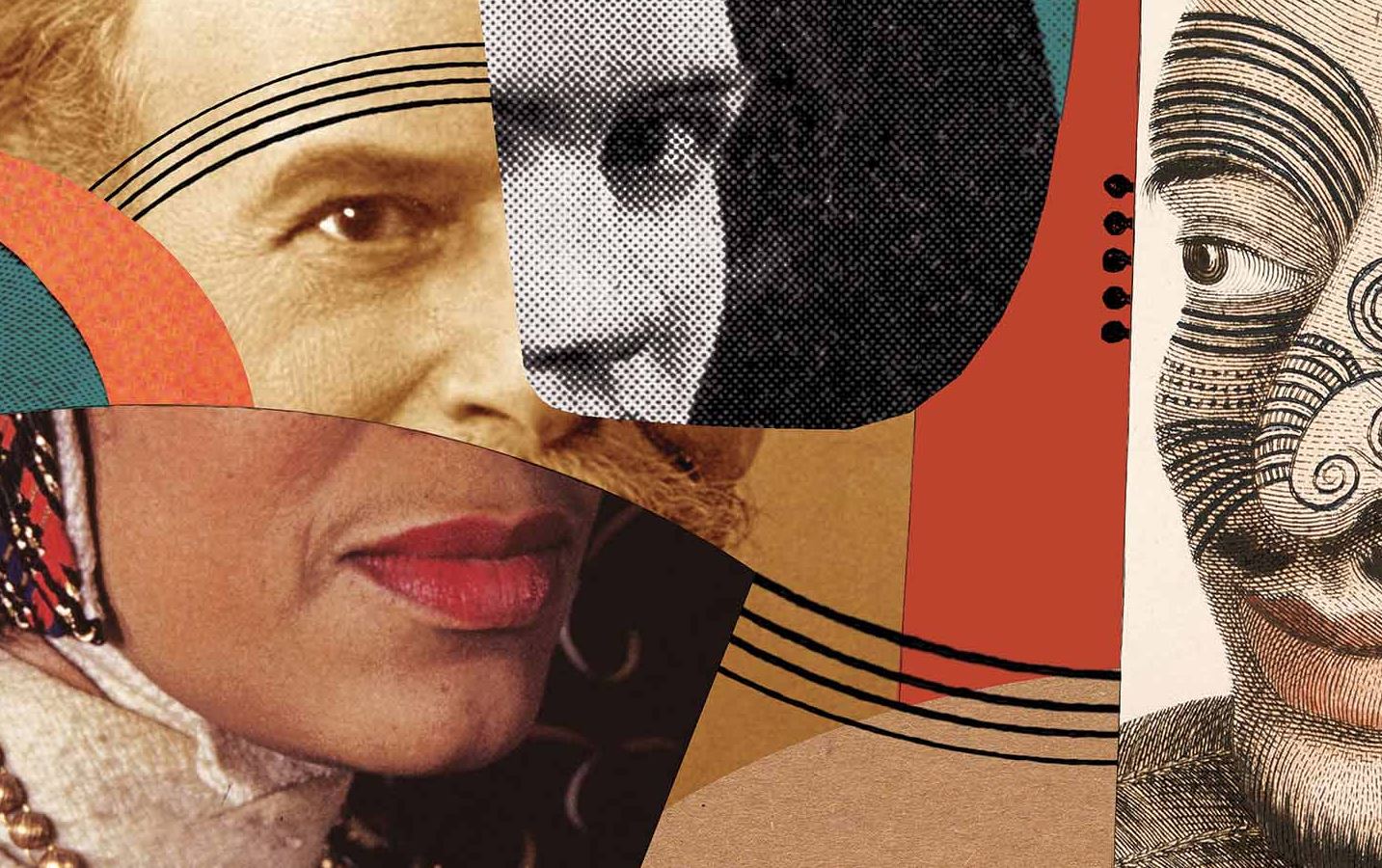
Human groups shape, share, and sustain their worlds through symbols and stories
Beginnings of Observation
Before the term existed, curiosity about difference guided travelers who compared diets, songs, and ceremonies with their own, and those comparisons birthed fascination mixed with confusion. When scholars began to record customs systematically, they were not only studying others, they were also redefining themselves. The roots of cultural anthropology lie in this mirror, where every description of another people reflects both observer and observed. As fieldwork matured from rumor to participation, empathy replaced distance, and the notebook became less a record of strangeness and more a map of shared humanity written in local dialect.
Culture as an Invisible Architecture
Every society builds an unseen scaffolding of rules and meanings that guides behavior without coercion. This structure grows through habit, language, and imagination. Greetings dictate respect, meals express hierarchy, and clothing marks belonging. To an outsider, such gestures appear trivial until they are broken, for only in disruption do these norms reveal their authority. Cultural anthropologists learn to decode this architecture not by taking measurements, but by listening to stories, watching rituals, and feeling the weight of silence that follows a misstep. In doing so, they trace the living grammar of human coordination.
Symbols That Bind and Divide
A flag, a mask, or a song can fuse crowds into unity or draw borders sharper than any fence. Symbols condense history into recognizable form and travel faster than armies or treaties. Anthropologists treat symbols as containers of memory. They ask what a color means, why a gesture comforts, or how a story justifies a law. These signs operate across scales, shaping nations and guiding children in play. When meanings collide, the result may be misunderstanding or innovation. Cultures evolve through such collisions, and symbols become bridges when interpreted with patience rather than fear.
Ritual as Repetition with Purpose
Daily chores become rituals when repetition gains intention. A handshake, a funeral, or the lighting of a lamp transforms ordinary acts into performances of belief. Anthropologists observe how ritual compresses time by allowing ancestors to rejoin the living through familiar motion. Within that choreography, hierarchy, faith, and memory dance together. The moment may feel personal, yet it rehearses social order for everyone present. Whether solemn or playful, ritual teaches stability through rhythm, and in its pauses we hear how communities remember continuity while adapting to change.
Kinship and the Cartography of Care
Family is both biological and imagined. Cultures decide who counts as kin, who inherits property, and who owes respect. In some places, cousin marriages preserve wealth, while elsewhere they provoke taboo. Adoption, godparenthood, and alliance blur lines of descent, proving that kinship is less about blood than about obligation. By charting these networks, anthropologists uncover how affection and authority intertwine. Every kinship term carries emotional geography: who may command, who may nurture, and who must reconcile. These maps shift with economic need, migration, and belief, yet they remain humanity’s oldest blueprint for cooperation.
Language as the Skeleton of Thought
Words shape perception, and grammar frames possibility. Linguistic anthropologists study not just vocabulary, but rhythm, metaphor, and silence. Each tongue encodes categories that reveal priorities: a fishing people may distinguish a dozen shades of tide, while a mountain community describes cloud movement with precision. Translation is never perfect, yet it teaches humility by showing that other ways of naming also imply other ways of reasoning. Language binds individuals into memory. When a language vanishes, an entire logic of living vanishes with it, leaving archaeology of sound in songs that no longer find a singer.
Exchange Beyond the Marketplace
Trade is not limited to money. Gifts, favors, and rituals of hospitality circulate value that cannot be priced. Anthropologists studying exchange find that generosity often binds rivals and creates debt as firm as any contract. Feasts, weddings, and communal labor balance competition with alliance. Even when goods cross borders, their meaning follows custom. A shell necklace might symbolize status in one context and friendship in another. By tracking how objects move, scholars reveal moral economies that defy market logic and remind us that wealth measured only in numbers is the least enduring kind.
Gender and the Grammar of Power
Every society teaches scripts for masculinity, femininity, and the spaces in between. Some assign labor along lines of anatomy, others along myths of origin. Cultural anthropology examines how roles are performed and contested, how they shift under contact, and how resistance grows in language and dress. Gender is a conversation written on the body, but edited by culture. When norms crack, identity emerges as negotiation, not rebellion. Documenting these negotiations reveals how freedom and belonging coexist in tension, and how individuals craft meaning within constraint.
Belief Systems as Maps of the Unseen
Faith provides coordinates for uncertainty. Whether through ancestor worship, sacred texts, or oral prophecy, belief systems teach communities how to face death, chance, and desire. Anthropologists approach religion as social language that assigns order to chaos. Altars, chants, and pilgrimages form the syntax of hope. Within this syntax lies ethical instruction that binds individuals to collective destiny. When belief meets modernization, it bends but seldom breaks, absorbing science, technology, and art into its vocabulary. The study of faith therefore becomes the study of adaptation itself.
Technology and the Rewriting of Custom
Digital networks now extend kinship, trade, and ritual into virtual realms. Anthropologists observe how emojis replace gesture, how online communities replicate initiation and exile, and how global contact compresses distance without dissolving difference. Smartphones serve as altars of attention, carrying photos, prayers, and market stalls in a single palm. Yet, technology does not erase tradition; it rephrases it. A meme can carry myth, and a livestream can become ceremony. The study of culture in the digital age reveals that humanity continues to seek connection, only now through light instead of fire.
Fieldwork as Encounter and Reflection
Participant observation remains the heart of anthropological craft. Living among others, eating their food, sharing work, and enduring mistakes transform research into relationship. Fieldworkers confront their own assumptions when the expected proves untrue. The diary records confusion as often as insight. Over time, trust converts curiosity into collaboration. The best ethnographies are coauthored by those observed, turning the outsider into an interpreter rather than a judge. In this humility, anthropology finds its moral core: knowledge must serve understanding, not domination.
Culture in Motion and the Idea of Change
No tradition stands still. Migration, conquest, and exchange stir constant renewal. Anthropologists track how practices travel, merge, and reinvent themselves under pressure. A dance once tied to harvest may become a tourist performance, yet its rhythm still carries ancestral code. Hybridity, rather than purity, becomes the mark of vitality. Understanding this motion helps societies resist nostalgia that freezes culture into museum glass. Life insists on evolution, and anthropology listens to that insistence with both respect and curiosity.
Ethics, Representation, and Responsibility
To describe another life is to hold power. The ethics of anthropology demand reflexivity, informed consent, and transparency. Misrepresentation wounds as deeply as exploitation. Scholars therefore debate who owns data, who profits from publication, and who tells the final version of events. Collaborative research models now invite communities to co-curate exhibitions and co-author findings. This shift acknowledges that anthropology belongs not to academia alone but to everyone whose story contributes to the shared human archive.
Art as Cultural Testimony
Objects of beauty carry social logic within their form. A woven basket encodes geometry, economy, and mythology at once. Carvings speak of ancestors, and murals retell migration under color. Anthropologists treat art as both record and argument. Through it, a people declare identity, memory, and resilience. When sold in markets or hung in galleries, art negotiates between sacred and secular worlds. Studying this exchange exposes the tension between appreciation and appropriation, and calls for respect that honors both artist and origin.
Urban Anthropology and the Village Within the City
Metropolises grow faster than memory can adapt, yet even skyscraper districts host invisible villages. Vendors claim corners, migrants recreate hometown rituals in apartments, and alley shrines absorb the prayers of commuters. Urban anthropologists map these microcultures, discovering that community survives density by creating islands of intimacy. Street markets, music scenes, and neighborhood associations rewrite kinship through proximity rather than ancestry. Cities thus become laboratories of cultural invention, proving that tradition can thrive under neon as surely as under moonlight.
Politics of Identity and the Stories Nations Tell
National narratives often rest on selective memory. Flags, monuments, and schoolbooks sculpt consensus by choosing which past to highlight. Anthropologists studying identity trace how pride coexists with exclusion, and how marginalized groups craft counterhistories through song, protest, and literature. By revealing whose voice dominates the chorus, anthropology exposes the mechanics of belonging. In doing so, it suggests that harmony requires polyphony, not unison, and that listening across difference is itself an act of citizenship.
Emotion and the Anthropology of Feeling
Feelings are not purely personal; they are taught, named, and valued differently across societies. Anger may be shameful in one culture and righteous in another. Laughter may heal or insult depending on context. Anthropologists record these emotional grammars to show that expression is also education. By comparing how people mourn, love, or envy, they uncover the social scaffolding of intimacy. Emotions reveal what a community fears to lose and what it hopes to preserve, making them the most honest currency of culture.
Material Culture and the Memory of Things
Objects outlive their makers. A broken pot, a wedding ring, or a notebook filled with receipts carries residues of touch. Material culture studies explore how possessions anchor identity. Ownership confers control, but also care. Heirlooms connect generations, while consumer goods broadcast aspiration. Anthropologists learn from both ancient ruins and modern closets, understanding that things are companions in human stories. They record not only what objects mean, but what people do with them, because meaning without practice is only half alive.
Globalization and the Paradox of Connection
Air travel and internet links shrink the planet into instant communication, yet local distinctiveness persists stubbornly. Cultural anthropology examines how global flows of media, labor, and belief reshape traditions without erasing them. Fast food coexists with slow ceremony, and borrowed slang sits beside ancestral proverbs. The world grows smaller in distance but larger in interpretation. This paradox defines the present moment, where every handshake may cross multiple histories at once.
Listening as the First Science
In the end, anthropology returns to its simplest act: listening. To listen without assumption is to honor the speaker as an equal architect of truth. Cultures thrive when their stories are heard fully and retold responsibly. Whether in a desert camp, a city square, or a digital chat, the same principle holds: understanding grows through attention. The field will continue to change, as it always has, but its purpose remains steady. To describe humanity is to care for it, word by word, gesture by gesture, until curiosity itself becomes a shared home.