

The Sky That Remembered Itself
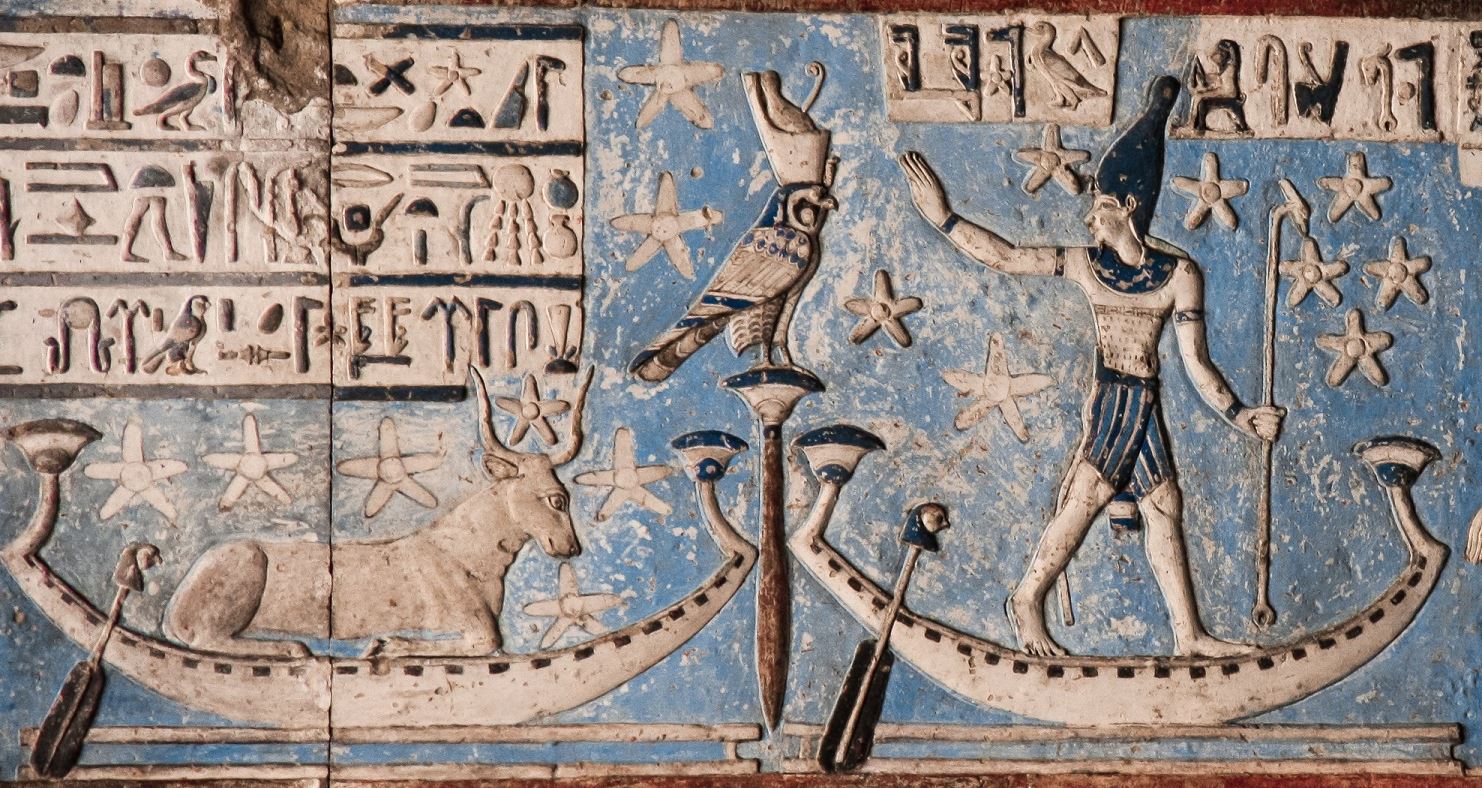
Early observers turned the night into a clock, a map, and a mirror of thought
Watching the Heavens Before History
Before language had alphabets and before numbers had written form, eyes turned upward in curiosity. The dark canopy above villages and deserts seemed alive with meaning. Hunters learned to mark seasons by constellations that rose and vanished with predictable rhythm. Farmers found the same sky to be a silent calendar that instructed when to plant and when to harvest. Firelight below and starlight above shaped a symmetry of understanding. What began as wonder grew into measurement, and from that measurement came one of humanity’s oldest sciences. The first astronomers were storytellers who turned patterns of light into stories that taught survival.
Stone That Learned the Language of Light
Monuments across continents reveal how early people linked architecture to the heavens. At Stonehenge, great pillars framed the midsummer sunrise and the midwinter sunset with mathematical precision that spoke of long observation. In the temples of Karnak and Abu Simbel, Egyptian builders aligned corridors so that dawn’s first rays illuminated statues of deities only on specific days. Across the ocean, the Maya constructed pyramids where shadow formed the body of a serpent that slithered down the staircase during the equinox. These achievements were not coincidences. They were the result of generations who studied the sky so patiently that time itself became a tool of design.
The Sky as a Storybook of Order
Constellations offered a bridge between imagination and calculation. To the Greeks, Orion’s belt mapped heroism, while to the Chinese it represented officials of heavenly bureaucracy. In Mesopotamia, patterns of stars became symbols of gods whose behavior mirrored political hierarchies on Earth. Observation turned into myth, and myth into record. Clay tablets from Babylon preserved lists of planetary positions and lunar cycles that guided both worship and taxation. The sky’s motions became a mirror of governance, reinforcing the idea that cosmic order justified earthly rule. Through this lens, astronomy was not merely science but a language of authority.
The Mathematics Hidden in Shadows
Time demanded accuracy, and shadows provided the key. The gnomon, a simple vertical rod, gave rise to the sundial. Watching how its shade shifted across the ground revealed that light obeyed geometry. Egyptians divided daylight into hours long before mechanical clocks existed, adjusting the lengths according to season. In Mesopotamia, the division of the circle into 360 degrees came from their base-sixty number system, a decision that still defines navigation and geometry today. Through instruments as humble as sticks and stones, ancient observers quantified what they saw, turning nature into numbers and numbers into prediction.
The Moon and the Rhythm of Belief
The lunar cycle touched nearly every culture. Its phases shaped rituals of fertility, trade, and navigation. The crescent moon on temple carvings signified rebirth, while its disappearance suggested death and renewal. In China, moon watchers tracked not only its brightness but also its color, recording atmospheric changes that modern meteorologists now recognize as data. In India, festivals still follow lunar calendars that trace their origin to Vedic astronomers who calculated eclipses with startling precision. To follow the moon was to follow life itself, since tides, crops, and emotions all seemed to obey its silent command.
Solar Kings and the Calendar of Power
Where the moon governed cycles of reflection, the sun commanded cycles of rule. Ancient Egypt’s pharaohs were seen as children of the sun god Ra, their legitimacy tied to the daily resurrection of light. The Inca capital of Cusco was designed as a living sundial, its walls casting deliberate shadows that announced solstices to priests. In Mesoamerica, the Aztec Sun Stone recorded a cosmic schedule of ages, each destined to end by catastrophe. The connection between light and authority shaped both ritual and law. To master the measurement of daylight was to master the rhythm of society itself.
The Wanderers and Their Mysteries
Among the stars that kept fixed positions, a few defied stillness. These wandering lights became the focus of deep curiosity. The Greeks called them planetes, meaning travelers. Babylonian astronomers kept centuries of records charting their erratic motion across the ecliptic. From these patterns came the foundations of astrology, where planetary behavior was believed to mirror human fate. Yet observation grew more refined with time. Greek thinkers like Aristarchus proposed that Earth might move around the sun, though the idea found little favor. Even without telescopes, ancient observers recognized retrograde motion and periodic return, proving that patient eyes could rival instruments yet to be invented.
China and the Celestial Bureau
In ancient China, astronomy was both science and governance. The emperor’s court maintained official astronomers whose duty was to forecast eclipses and record celestial omens. Mistakes in these predictions were seen as moral failings rather than scientific ones, since the sky’s harmony reflected political virtue. Chinese star maps, engraved on stone and silk, listed thousands of stars centuries before similar catalogs appeared elsewhere. Their records of supernovae and comets remain valuable to modern astrophysics. This meticulous watchfulness transformed the heavens into a state archive, proving that political order and cosmic observation could share the same vocabulary of precision.
The Instruments of Prediction
Observation demanded tools that extended sight and memory. The astrolabe, developed in the Hellenistic world, allowed sailors and scholars to calculate latitude by measuring star angles above the horizon. Islamic scholars later refined its design, turning it into both navigational device and teaching aid. The armillary sphere, a skeletal model of celestial circles, visualized how the heavens revolved. Each ring represented a cosmic path, teaching students the harmony of spheres. These instruments were more than metal and numbers. They embodied the unity of curiosity and craft, bridging art with intellect in ways that echoed through every later age of exploration.
Temples That Functioned as Observatories
Across continents, sacred structures doubled as scientific instruments. At Chichén Itzá, the round building known as El Caracol aligned with Venus at key points of its cycle. In the deserts of Nabta Playa, stone arrangements predated Egyptian pyramids yet marked solstices with unerring accuracy. The Ziggurat of Ur reached upward not only to honor gods but also to monitor the sky, serving as both altar and observatory. Religion and research intertwined seamlessly. To watch the stars was to seek divinity, and to align stone with starlight was to converse directly with creation itself.
The Ocean of Night and Its Travelers
Navigation by the stars turned oceans into highways. Polynesian voyagers memorized constellations as waypoints, reading swell, wind, and sky color as part of a single integrated system. Without written charts, they carried maps in memory and song. The North Star anchored direction for traders from the Mediterranean to the Silk Road, while in the Southern Hemisphere, the Cross guided explorers across unknown waters. Astronomical knowledge became not only spiritual but practical, enabling migration, commerce, and discovery long before magnetic compasses or chronometers existed. In every journey, the stars served as silent companions of courage.
Eclipses and the Geometry of Awe
When the sun darkened or the moon turned red, the sky itself seemed to pause. Ancient observers feared and revered these moments, yet some learned to predict them. Babylonian scholars compiled eclipse cycles called the Saros, allowing them to forecast events decades ahead. In China, the ability to announce an eclipse before it occurred marked imperial legitimacy. The Maya constructed observatories where narrow slots framed the horizon exactly where the sun would vanish and reappear. Though many saw these phenomena as divine omens, others saw them as proof that the universe followed laws discoverable through patience.
The Transfer of Knowledge Between Worlds
Ideas about the heavens traveled with merchants and scribes as eagerly as spices and silk. Greek astronomers studied Babylonian records to refine their models, while Islamic scholars preserved and expanded Greek texts in Arabic, later passing them to medieval Europe. Indian mathematicians contributed trigonometric methods that improved planetary calculation. Observatories in Baghdad, Samarkand, and Córdoba became centers of both translation and discovery. The constellations we know today are composite inventions, built from layers of observation and imagination contributed by countless cultures. The sky united humanity long before borders divided it.
The Calendar as a Machine of Memory
Calendars turned celestial patterns into social structure. The Sumerians measured years by lunar months but inserted adjustments to match the solar cycle. Egyptians perfected the 365-day year by following Sirius, whose heliacal rising coincided with the flooding of the Nile. The Maya combined ritual and solar calendars into a complex system that tracked both cosmic and civic events. Calendrical precision allowed governments to coordinate taxes, festivals, and construction projects. In a sense, every calendar was a mechanical invention made of observation and arithmetic. It gave civilization a rhythm as dependable as sunrise.
Philosophy Born from the Sky
Observation soon raised questions that no measurement could fully answer. Why did the heavens move in circles, and what lay beyond them? Plato imagined perfect spheres guiding divine order, while Aristotle’s universe nested crystal shells around Earth. The Stoics saw the cosmos as a single breathing organism. In India, cosmological texts described an infinite cycle of creation and destruction governed by moral balance. The night sky became a stage for metaphysics, where light itself symbolized consciousness. Ancient astronomy was therefore as much about meaning as mechanics, seeking harmony between observation and existence.
Legacy Written in Light
The ancient astronomers may have lacked telescopes, yet they possessed a depth of attention that rivaled any modern instrument. Their maps and monuments reveal accuracy achieved through persistence rather than equipment. Each carved line or recorded angle represents not only data but devotion. They charted a cosmos that included both physics and faith, showing that curiosity and reverence can coexist within the same gaze. The stars they studied still shine upon us, unchanged in position but enriched by the stories humanity built around them. In every astronomical calculation today, their patience endures.
The Endless Dialogue Above
When we look at the night sky, we participate in the oldest conversation on Earth. Every alignment, every measurement, and every myth is a reply to ancestors who first dared to wonder. Ancient astronomy taught us that light carries knowledge across time and that observation is an act of remembrance. Though instruments have evolved and explanations have grown precise, the impulse remains unchanged. The same stars that guided shepherds and emperors still wait to be read. To study them is to remember that history began not in cities or fields but in the quiet act of looking upward.